
Godzilla
Godzilla is one of the strongest symbols of the destruction, fear and strength of the cinema on gomovies. Directed by Gareth Edwards in 2014, the re-interpretation of the legendary monster is loaded with significant emotional aspects and stunts of unbelievable proportions and combines human frailty with the power of titans. It is not merely a tale of a monster emerging out of the sea, but a tale of man facing the forces it cannot comprehend, shrouded in fear, wonder and surprise.
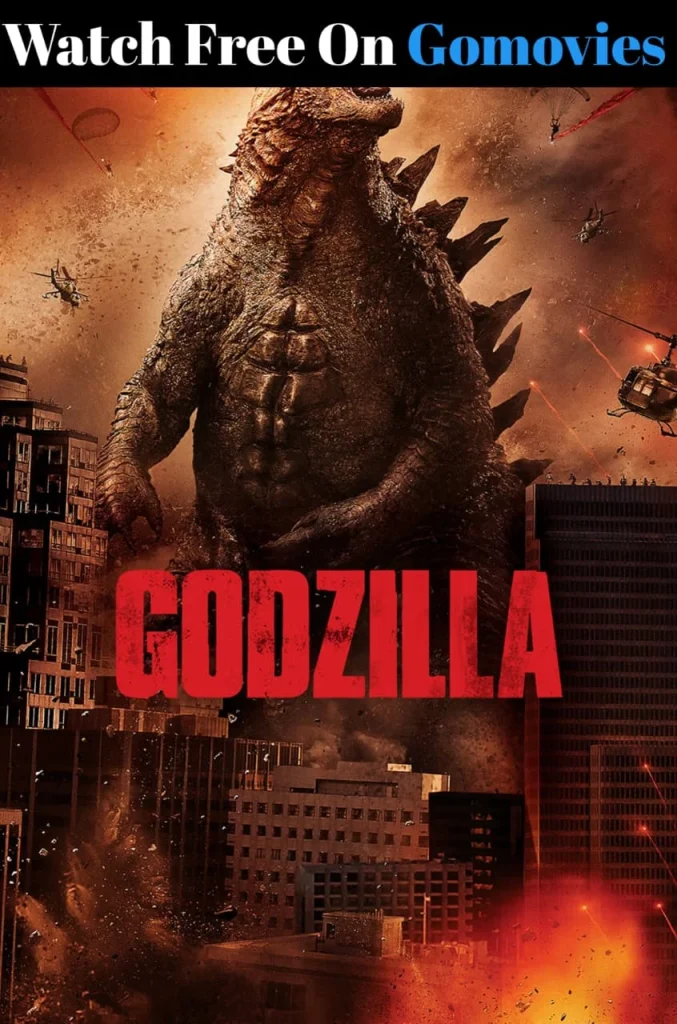
Placed in ruined cities, crumbling skylines, and shaking shores, Godzilla links personal tales with massive havoc. The movie creates the spooky mood in which nature retaliates against the arrogance of man. Even below the roars and earthquakes, there is an extremely emotional fight concerning family, survival and acceptance that there are battles one should not take charge of. Godzilla is not a monster anymore as he is an ancient protector who has to appear to balance things.
| Aspect | Details |
|---|---|
| Title | Godzilla |
| Director | Gareth Edwards |
| Producers | Thomas Tull, Jon Jashni, Mary Parent, Brian Rogers |
| Production House | Legendary Pictures, Warner Bros. Pictures |
| Starring | Aaron Taylor-Johnson, Elizabeth Olsen, Bryan Cranston, Ken Watanabe |
| Cinematographer | Seamus McGarvey |
| Music Director | Alexandre Desplat |
| Editor | Bob Ducsay |
| Art Director | Peter Russell |
| Stunts | Scott Rogers & Team |
| Release Date | May 16, 2014 |
Plot
The novel starts with a fateful nuclear accident in Japan, which has rendered scientist Joe Brody full of sorrows and suspicions. His son, Ford Brody, a bomb-disposal expert comes back home just to be dragged back into the fray as monstrous forces start appearing. When the ancient beings called MUTOs come to life, the world is thrown into havoc and it turns out that something much bigger and older has also come to life as well: Godzilla, the first predator of the forgotten era of nature.
The story is a mixture of the world-wide disaster and individual loss, as families have troubles to remain united in the world that falls apart under the pressure of enormous challenges. Ford is caught in the line of destruction, going through devastated cities and military actions. However, the emotional center of the film is how humanity gets to know how small it is. The sequel of Godzilla is the effort of nature to establish order and have the monstrous conflicts transformed into a fearful confrontation of survival and fate.
Performance
Bryan Cranston plays one of the most emotional roles of a man, Joe Brody, who is heartbroken to find out what is going on behind the impossible tragedy. His vehemence gives seriousness to the initial chapters as it levels the pandemonium with the crude human suffering. Aaron Taylor-Johnson delivers a constant, disciplined force as the character of Ford Brody as a soldier caught between duty and desperation to go back to his family in the midst of destruction.
With a convincing authority, Ken Watanabe is Dr. Serizawa, the scientist who realizes that humanity is not always able to control nature. Elizabeth Olsen provides a touch of emotion, the fear and hope of the civilians that are caught in the grotesque crossfire. Collectively, the cast continues to make the film grounded in emotion so that the huge battles are not empty spectacle.
Direction and Screenplay
Director Gareth Edwards creates the world of Godzilla with a certain amount of reserve and visual might. His style is rather focused on tension and scale, and it is frequently presented in a way of human destruction, either through windows, collapsing trains or dust-filled streets. This makes it appear realistic in the feeling of helplessness, and reminds the viewers that human beings are just spectators to titans fighting in the sky. Edwards turns tragedy into a work of art and makes vulnerability rather than mere chaos.
The screenplay strikes a good balance between mystery, family drama and monstrous spectacle. It does not jump at the action, rather it creates suspense by slowly unveiling the destruction and the threats coming in. The theme that balance is determined by nature is enhanced in the writing. The pacing, crisp dialogue and emotional undertones of the script help the appearance of Godzilla to be earned and monumental when he finally comes out in full force.
Music
The score by Alexandre Desplat is powerful and somber at the same time. The music switches between its silent fear and its massive orchestral bravura, reflecting the up and down action of the giant powers. Godzilla stomps are accompanied by low horns, and the titanic battles are accompanied by dramatic crescendos. The music enhances every unveiling, providing the impact to every roar and shockwave.
The more somber songs enhance human feelings, and they are used to support the scene of loss, fear, and hope as families are fighting to exist. The music does not overwhelm but rather broadens the tension and emotionalism. The music of Desplat contributes to creating an impression of the primeval strength, the presence of Godzilla vibrating in every note. The score itself becomes a support of the atmosphere of the film, which reinforces the action and drama.
Theme
The movie, Godzilla, is about the frailty of the human race in a world that is dominated by forces that are way beyond their control. The movie introduces nature as ancient and authoritative that reminds people of the fact that the technical power of mankind is in nothing in comparison with the primordial giants. It refutes the notion that humans are able to conquer all the environments around them and reveals how arrogance may fail miserably in the face of the true power of nature. Godzilla turns out to be the personification of equilibrium, rather than devastation.
Family and loss themes help to give the movie an emotional foundation. The battles of the characters are not to gain glory, but to survive and be connected. The film raises the question of the price of secrecy, the effects of loss and the ability to confront one with fear. In the end, Godzilla imparts the lesson of humility, as sometimes even the creatures that humanity misunderstood can be its savior. It shows that the same thing can bring destruction and salvation, depending on how one views it.
Conclusion
Not a monster film, but a major film with emotional undertones and depth, Godzilla is a potent film that is rich in cinematic spectacles. Gareth Edwards creates a world in which all shakes, shadows, and roars in the distance create suspense. The movie blends fantastic acting with spectacular technical expertise, which makes the narration deeply personal and grandly impressive. The presence of Godzilla turns out to be a force of nature rather than a destruction creature.
It concludes with catharsis and awe when Godzilla restores the order and goes back to the sea leaving mankind humbled and thankful. The film incorporates emotion, horror and spectacle in a memorable experience. To people who want a combination of emotional narrative and titanic action, Godzilla is a towering figure of a contemporary monster movie. It is a lesson that not to destroy–but to defend–some of the legends come up.