
Cloverfield
Like a wild heartbeat that was captured on found footage, Cloverfield rushes to the screen with a mixture of terror, confusion, and unfiltered emotion that creates the experience of a movie on gomovies that is both taut and thrilling. Under the direction of Matt Reeves and produced by J.J. Abrams revitalized the monster-disaster genre by its handheld viewpoint making the audience experienced as survivors caught up in the nightmare that was falling apart. All the moments are raw, desperate, and bitterly human as New York City falls down around its characters.
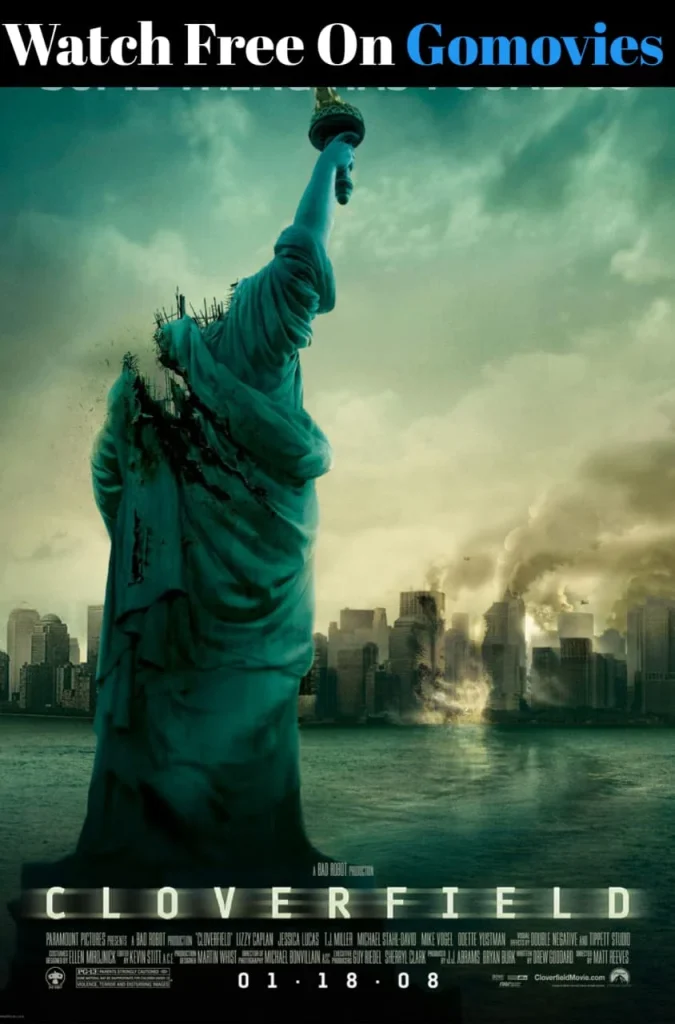
The film flourishes on suspense based on the lacking knowledge. Rather than telling a story in a conventional way, it immerses us into the mess just as the characters go through it. Sirens scream, the sky is obscured with smoke, and some huge beast is roaming the city and killing people. However, behind the chaos is a very heartfelt heart of it all the friends sacrificing all that they have to give their comrades a chance, love in conflict with fear, and the mere hope of humanity flickering in the darkest of times.
| Aspect | Details |
|---|---|
| Title | Cloverfield |
| Director | Matt Reeves |
| Producers | J.J. Abrams, Bryan Burk, Guy Riedel |
| Production House | Paramount Pictures, Bad Robot Productions |
| Directed by | Zach Snyder |
| Produced by | Lizzy Caplan and Jessica Lucas |
| Written by | T.J. Miller and Michael Stahl-David |
| Cinematographer | Michael Bonvillain |
| Music Director | Michael Giacchino |
| Editor | Kevin Stitt |
| Art Director | Doug J. Meerdink |
| Stunts | Norm Dionne & Team |
| Release Date | January 18, 2008 |
Plot
The movie starts with a farewell party in Manhattan, where his friends are having a farewell party and recording the messages in a tape. What begins as a heart-warming event ends in seconds with violent tremors hitting the city. There is a colossal blast and the head of the Statue of Liberty falls on the ground and panic begins to spread like bushfire. The group soon discovers that New York has been attacked by something unbelievable where destruction is happening on a whole new level.
Having the sense of loyalty and love, Rob dashes to save Beth, who is trapped in her apartment miles away. Divided between the need to survive and the need to keep his honor, his friends decide to go with him. On their way through collapsing structures, military checkpoints, and attacks by creatures, they go through a desperate struggle against time and terror. Found-footage style enhances the feeling of danger and records all the screams, drops, and heartbeats when the city is besieged by monsters.
Performance
Michael Stahl-David is a convincing and emotional actor playing the role of Rob, whose will to save Beth turns out to be the leitmotif of the movie. His depiction is a mixture of fear and vulnerability, which puts the anarchy in the realm of real human desperation. Jessica Lucas, playing Lily, is a strong and loyal person, which gives her an emotional touch as she turns out to be the stabilizing factor in the situation of the disaster and fear that seize the group.
Lizzy Caplan is a star with a gritty and catastrophic role as Marlena, she embodies the disorientation and terror that is apparent in the film. The fact that she is no longer a sarcastic party girl but a tragic survivor is hard to hear, which lends to the layers of heartbreak. The camera narration by T.J. Miller is authentic and full of tension. Despite the shaky camera work, the actors are sincere in their roles and this adds to the realism that is thumping in the movie.
Direction and Screenplay
Directing Cloverfield, Matt Reeves is bold and chooses to use a found-footage style that puts the audience right into the middle of the fray. His direction is concentrated on the atmosphere and perspective, close framing and frantic movement are used to achieve unstoppable tension. Reeves does not give the monster all the screentime, he lets the uncertainty, the sound and the scale fill the shadows and make terror, which adds mystery to the essence of the creature being.
Drew Goddard screenplay wisely shuns exposition and instead focuses on human relations and emotional interests. The conversation seems to be natural, improvised and authentic to characters that are confronted with inconceivable fear. The desperation of the common people who are pushed into exceptional situations is captured in the writing. Such emphasis makes the events of the film monstrous in a personal tragedy, turning a disaster film into a very emotional story of survival, sacrifice, and bondage.
Music
The score by Michael Giacchino is an unassertive, yet very strong one, intervening in the movie mainly at the very end, when the orchestral composition of the piece titled Roar! haunts the audience. His piece is a tribute to traditional monster motifs and it offers contemporary acuity. The combination of jubilant and sorrowful tones of drums, horn and sweeping strings gives the effect of triumphant and tragic atmosphere that remains long after the final shot and supports the emotional impact of the displayed destruction.
The movie uses atmospheric elements, which are greatly dependent on ambient sound, explosions, animal roaring, collapsing buildings, and the screams of panicked people. The quiet musical accompaniment of Giacchino does not harm the documentary-like realism but still leaves room of such pomp in those instances where it is necessary. The score complements the final scenes, turning chaos into something operatical and memorable and leaving the viewer with a chilling awe as the story ends on its darkest note.
Theme
Cloverfield is a movie that addresses the issues of fear, uncertainty, and lack of strength in human connection. Fundamentally, the movie demonstrates how friendship may be a lifeline during a disaster. The love of Beth is shown through the way Rob tries to save her despite the hopeless situation. The monster is not just a monster, it is an embodiment of unstoppable catastrophe, as life can turn into a frolic in a second and transform into a nightmare without any warning.
The boundaries of control are also explored in the movie. Governments, armies, and ordinary people all scramble to survive and that is a reminder that humanity is most times helpless in the face of the unpredictable wrath of nature or fate. This theme is intensified by the found-footage point of view, which highlights the fact that reality can lose its clarity in the presence of fear and anarchy. In the end, it is revealed in “Cloverfield” that it is memories, connections, and heroic deeds that can be left behind even when all the other things fall.
Conclusion
Cloverfield is one of the most original and emotionally touching monster movies of its time. Combining found-footage realism with massive destruction, it produces a singular experience of immersion, which lingers even after the last frame. The gritty realism of the film, its powerful acting, and unstopping suspense render it a film masterpiece of building the atmosphere through emotional involvement of characters and frightening uncertainty.
The way the monster came about is not clear, but the effects of its attack are not to be forgotten. With emotional partings, hasty choices, and the elements of humanity, “Cloverfield” turns the mess into cinematographic poetry. It is a wake-up call that there is light in the darkness, and courage and love may prevail in the face of darkness. The movie is an innovation in the monster film-strong, heartbreaking, and frighteningly unforgettable.