
Django Unchained
Django Unchained is a western drama movie on Gomovies directed in 2012 by Quentin Tarantino and starring Jamie Foxx as the main character. A blend of high action, black humor and social commentary, the film is a stylized, but compelling, depiction of slavery in America. It is a bold, unapologetic, and cinematic story that combines the dialogue-driven style of storytelling that Tarantino is known for with some heavy performances. The film has come to be a legend due to its boldness in tackling historical content and its avenging storyline.
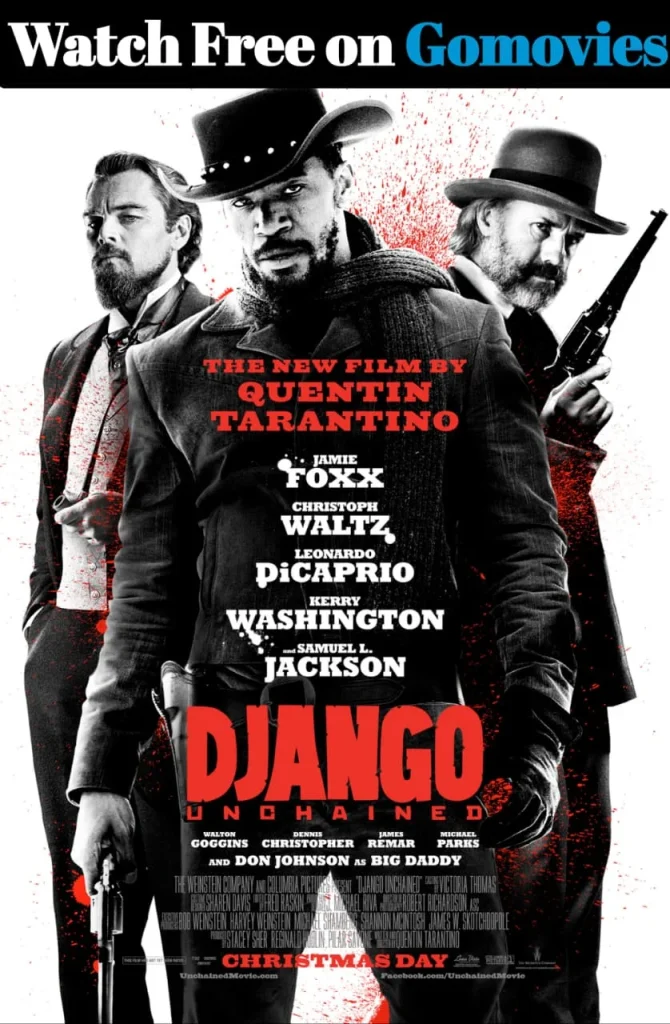
The movie sets the scene with a tense and provocative mood, with humor and brutality, which can be seen since the very beginning of the movie. Tarantino is able to strike the right balance between action scenes and emotionally charged scenes and the journey of Django was not only exciting but also powerful. The multifaceted plot of the movie deals with the issues of justice, freedom, and vengeance and makes the viewers entertained with the combination of the eye-catching scenes and the unforgettable dialogues. It is a contemporary western that has a social conscience.
| Aspect | Details |
|---|---|
| Title | Django Unchained |
| Director | Quentin Tarantino |
| Producers | Stacey Sher, Reginald Hudlin, Pilar Savone |
| Production Companies | Columbia Pictures, The Weinstein Company, Brown 26 Productions |
| Starring | Jamie Foxx, Christoph Waltz, Leonardo DiCaprio, Kerry Washington, Samuel L. Jackson |
| Cinematography | Robert Richardson |
| Music Director | Various Artists (curated by Quentin Tarantino) |
| Editor | Fred Raskin |
| Genre | Western, Drama, Action |
| Release Date | December 25, 2012 |
| Language | English |
Plot Overview
It is about a freed slave, Django (Jamie Foxx) who becomes a bounty hunter and joins forces with a dentist-turned-bounty-hunter Dr. King Schultz (Christoph Waltz). They all hunt down the infamous outlaws as Django carries out a personal crusade to save his wife, Broomhilda, who is in the hands of a cruel plantation owner. The story examines the ugliness of slavery and intertwines it with a vengeance-filled storyline and action-packed scenes.
The experience of Django is a metamorphosis of bravery, daring and ethical self-assessment. He finds a way to cope in the world of violence, and he rebels against those structures that kept him and other people as prisoners. The movie is filled with suspense, gun battles and tactical moves to propel the plot. The story is based on loyalty, justice, and personal agency, providing an emotionally charged and adrenaline-filled cinematography experience.
Performances
Jamie Foxx can play the role of Django with great power, weakness, and will. His description is an emotional nuance of a man who wants to find justice in the world of violence. Foxx has managed to combine the serious with the slightest humor, which makes Django a complex and easy-to-identify character. The relationship he has with Christoph Waltz improves the action and character development in the movie.
Christoph Waltz is charismatic, intelligent and morally upright as Dr. King Schultz. Leonardo DiCaprio as Calvin Candie is a chillingly intense villainous plantation owner. The character of Broomhilda, the character of Kerry Washington, gives emotional support and stakes to the quest of Django. The actors Samuel L. Jackson and Don Johnson are also supporting actors that bring a lot of tension, wit and authenticity to the story of the film.
Direction and Screenplay
The direction of Quentin Tarantino is brave, fashionable, and without concessions. The film is very engaging because of his trademark dialogue, non-linear plot, and active pacing. Tarantino balances the graphic violence with black humor, to form a distinct cinematic tone, which is both entertaining and thought-provoking. He is in control of visual storytelling which makes every scene an effective way to develop characters and advance the plot.
This screenplay is very adept at combining historical background with a revenge story to give the story of Django some richness. The dialogue is crisp, catchy and frequently sprinkled with wit and there are twists to the plot that keep the tension high. The attention to detail and the sense of rhythm enable Tarantino to track the convoluted character motives and action lines. The outcome is a film that is exciting and touching at the same time.
Music and Background Score
The music of the movie, selections made by Ennio Morricone, and others, adds to the western flavor and the emotional suspense. Memorable songs are used to break the action scenes, emotional scenes, and fights, giving the story intensity and rhythm. The music combines traditional western themes with contemporary ones and forms a unique sound atmosphere that underlines the plot and enhances the filming process.
Music is very essential in defining the mood and tone of character. Combining intense gun battle scenes with touching scenes of character self-representation, the soundtrack supports the themes of revenge and freedom in the movie. The tension and emotional appeal are also better created by the use of music, which helps viewers to become fully engaged in the dangerous and transformative experience of the protagonist of Django.
Themes
Django Unchained explores the issue of justice, revenge, and struggle against systemic oppression. It touches on the ethical issues of administering justice personally and dealing with the past horrors. The movie emphasizes the theme of power, courage and human need to be free and gives a socially topical and emotionally strong story. It makes the viewers think about morality, ethics, and the agency.
The next key theme is empowerment as an action and resilience. The life of Django has shown that intelligence, strategy and courage can be a combination that can solve major challenges. The movie also touches on the abuse of power, the violence of slavery, and the effects of the unchecked power. Tarantino provides entertainment and social commentary on a deep level through spirited action and dialogue, and the themes stick with the audience after watching.
Cinematography
The cinematography done by Robert Richardson captures the large sceneries and small confines with equal accuracy. The large shots of the southern plantations, the active action scenes, and the perfectly balanced close-ups underline the importance of both size and feeling. The lighting and framing effects contribute to the western style and ensure clarity of the image in case of complex sequences.
Cinematography supports thematic themes, such as the suppression of characters of the slave trade and the magnificence of the victories of Django. The light and open exterior and dark and closed interiors contrast to highlight tension and conflict. The camera tricks and smooth motion would contribute to an exciting experience that builds the plot and creates suspense despite causing tension and suspense.
Conclusion
Django Unchained is a powerful, dramatic, and beautiful movie which is full of action, black humor and social commentary. The acting by Jamie Foxx, the charisma of Christoph Waltz and the audacious direction of Tarantino make the movie experience a very immersive one. The revenge and liberation story presented in the movie keeps the audience emotionally engaged and the presentation of the story is supported by some spectacular visual scenes.
Django Unchained is a new western classic with memorable acts, sharp dialogue, and meticulous direction. Its ruthless, humorous, and emotional sense makes it a memorable film. The way in which the film explores the theme of justice, morality and empowerment make certain that this film is not only entertaining but also provoking, creating an impact on the audience all over the world.