
The Invisible Man
The Invisible Man (2020), with its chilling intensity, is an assault on the modern horror genre on gomovies, which slams the viewer like a final-minute goal in a world cup final. Under the guidance of Leigh Whannell, the movie reinvigorates an old concept but reinvents it into an atmosphere of a psychological battlefield where there is a lot of tension, emotion, and heart-pounding terror. It does not fear monsters in the dark, but rather the silent powerful presence looming in the open.
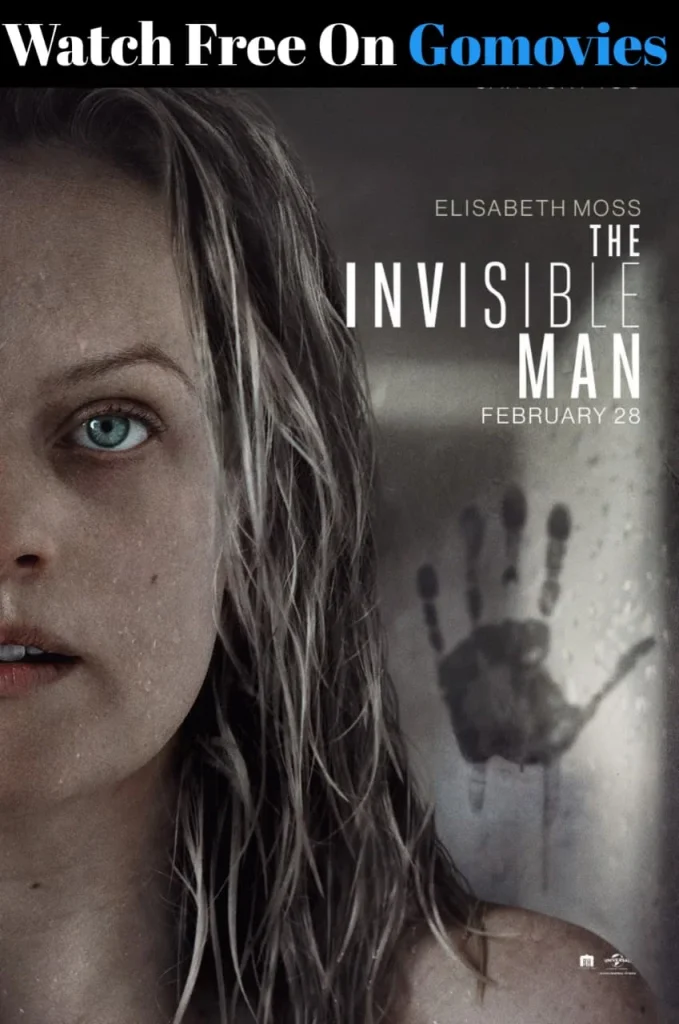
With the re premiering of this series, there is a stark feeling of realism, with the psychological abuse and manipulation being depicted in a horrifyingly well-known manner. It is even more terrifying than the jump scare because it remains silent and therefore, it is clear that horror is best executed through atmosphere and emotion. The is like observing a game when the enemy is not seen but each step can ruin the life of the main character. It is a high-intensity, nerve-wracking, and emotionally-charged story throughout.
Plot
The narration tells the story of Cecilia Kass, a woman in an abusive relationship with a rich technology genius, Adrian Griffin. She is in a state of panic after fleeing his high-tech fortress, in terror after remembering that she was controlled and tortured. Upon receiving the news of Adrian supposedly killing himself, Cecilia, at last, experiences a sense of hope again – a breath of freedom, which is so good that it is too good to be true. And soon it becomes obvious that it is.
Cecilia feels the presence of an invisible being stalking her as bizarre occurrences start taking place around her. Things are in motion, there are footsteps and danger lurks in the shadows. She believes that Adrian is still alive and that he is utilizing an advanced optical suit in order to turn invisible. The world questions her sanity but Cecilia does not give up. Her struggle becomes an exciting struggle of truth and life, as she is able to fight the force that no other person is aware of.
Performances
Elisabeth Moss performs a remarkable job, which serves as the base of the whole film in terms of emotional accuracy and nakedness. There is fear, anger and desperation in her facial expression with heart-aching clarity. She represents Cecilia as a woman struggling with trauma and trying to have her voice heard in a world that will always ignore her experiences. The moss lifts each scene to the level of silence to make it suspense and the helplessness into intense determination.
The supporting actors add emotional flavor to the story, in particular Aldis Hodge as the character of James Lanier and Storm Reid as the character of Sydney that add warmth and humanity to the world of Cecilia. Oliver Jackson-Cohen, who does not appear on screen much, makes a chilling impression as Adrian, who proves that a villain does not have to be physically present to take the center stage. The individual performances introduce a certain texture, which helps to base the supernatural idea on emotional truth.
Direction & Screenplay
Leigh Whannell is a director with scalpel precision and he has made each frame a psychological trap. He employs blank spaces such as battlefields and tension is created in complete silence. The shots are focused on the corners, corridors, and vacant seats as though challenging the observer to guess what is concealed there. His direction also resembles paranoia where the audience feels like it is being hunted like Cecilia.
The screenplay is done in tight control, combining psychological realism and sci-fi tension. Whannell does not use a lot of dialogue that could have been done without, as the fear is left to be brought to the fore by silence and some visuals. The novel is a restraint and chaos, which gives a sharp twist, which comes as an equalizer in a close game. Violence is never glorified in the writing but the emotional trauma of being under control, obsessed and manipulated is revealed.
Visual Style & Cinematography
The camera work turns the ordinary into the ghostly. The wide shots provide the effect of distance and leave the viewer to scan the frame to find possible threats that are present or absent. Blank spaces are made creepy and filled with tension that is hard to see. This visual technique transforms even the most basic rooms into the objects of fear, which adds even greater realism and psychological effect to the movie.
The lighting is not very warm and is minimalistic, which can be attributed to the emotional condition of Cecilia and her solitude. The visual arrangement is a reflection of an endless counterattack, the opponent is invisible but hits at any moment. Every frame seems to be calculated, with the stillness and shadows to build up the anticipation. The cinematography itself turns into the silent participant in the action and it helps viewers follow the horrifying situation of Cecilia.
Music
Sound designing turns out to be the heartbeat of the film. Each creak, air breathing or silent thud adds tension to the situation, as viewers wonder what is real. The art of silence is used in a strategic manner that increases the fear making the silence more terrifying than the music. It is as though a stadium had gone quiet and a referee was about to make a dramatic decision to stop the play–the atmosphere was so tense that you could feel it.
The score by Benjamin Wallfisch complements these situations with disconcerting strings and heartbeat rhythms. The music creates emotional tension when the characters face each other and falls to gentle sounds when Cecilia is in her moments of weakness. The harmony between sound and silence serves to produce a rhythmic effect on the psychology of the audience as that of a match where there are unexpected counterattacks. Sound work is crucial, as it is used to create fear by precision.
Themes
In its most basic form, the Invisible man attempts to question the theme of trauma, domination, and the frightening extent of abusive relationships. The invisibility of Adrian is a symbol of the psychological scars which are invisible but hurtful. Even after the abuser has physically disappeared, the film captures the dismal aftermath of manipulation, and the emotional weight of it is accurate and realistic. This theme takes the film a notch higher, as far as it is a very personal film.
Another theme explored in The Invisible Man is the way society tends to be skeptical of victims and the fact that Cecilia is not heard, rather she is considered to lack sanity. Her road is not only a struggle against Adrian but a struggle against the lack of faith, psychological terrorism, and emotional suffocation. Thematically, The Invisible Man is a strong message about reasserting control, escaping the chains of control and embracing the unseen wounds with power and boldness.
Conclusion
The Invisible Man is a psychological horror masterpiece that combines emotional reality with a spine-chilling suspense. Its survival tale, empowerment and re-taking charge lingers on after the credits finish. Elisabeth Moss is giving a performance of her career that is backed by a brilliant direction, haunting cinematography and masterful soundtrack. The Invisible Man does not only frighten, it also talks, it opens to show the silent struggle that many people are going through.
The last act explodes in cathartic energy, which provides Cecilia with the agency that she did not have years before. Her triumph is not physical but emotional and she breaks the circle of fear and gets back to herself. The Invisible Man is not just entertainment, it is a message of strength and it reminds us that though the invisible cannot be encountered, it can be when we stand up. It is an intense, memorable and strong experience.